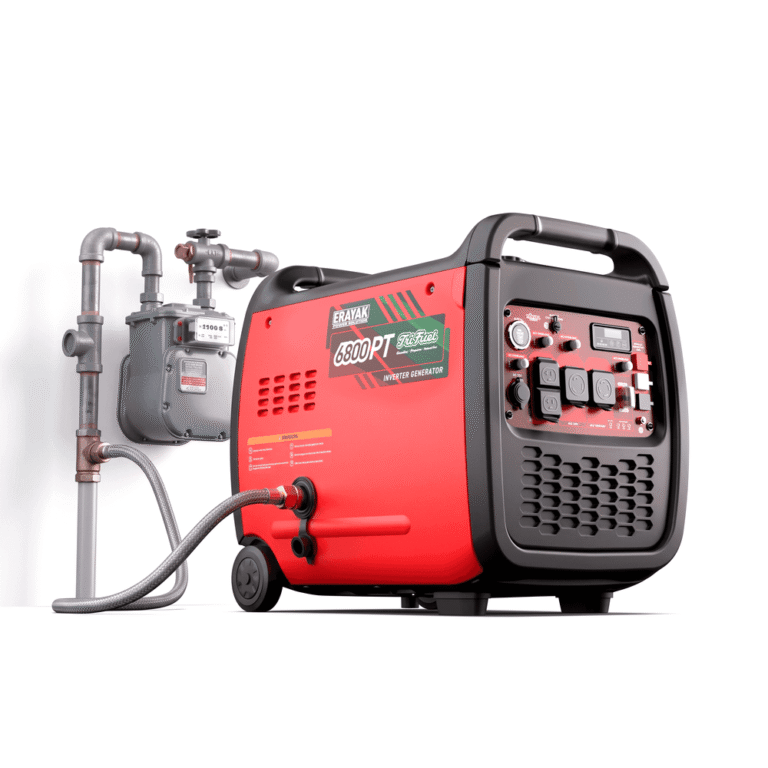
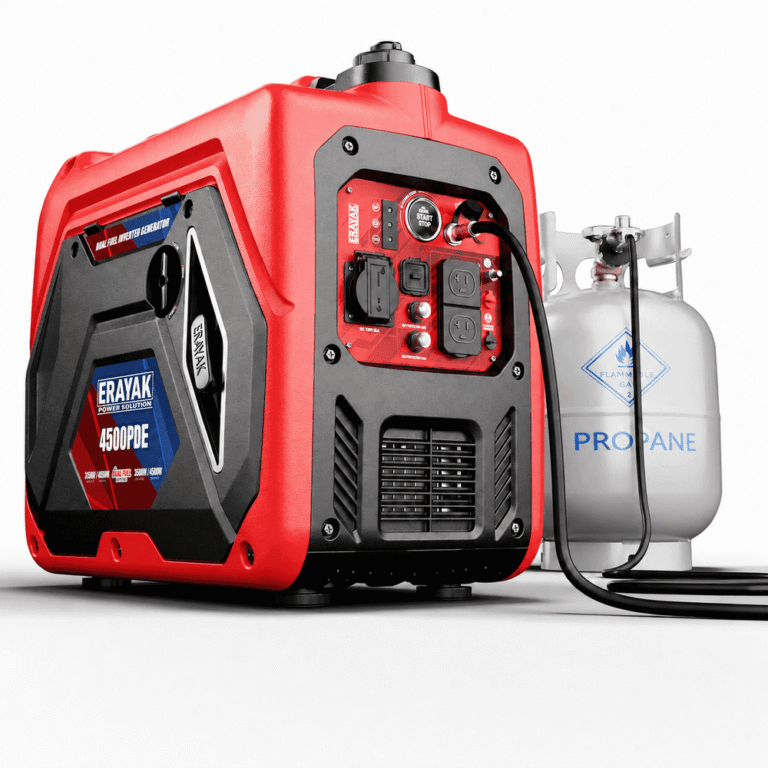
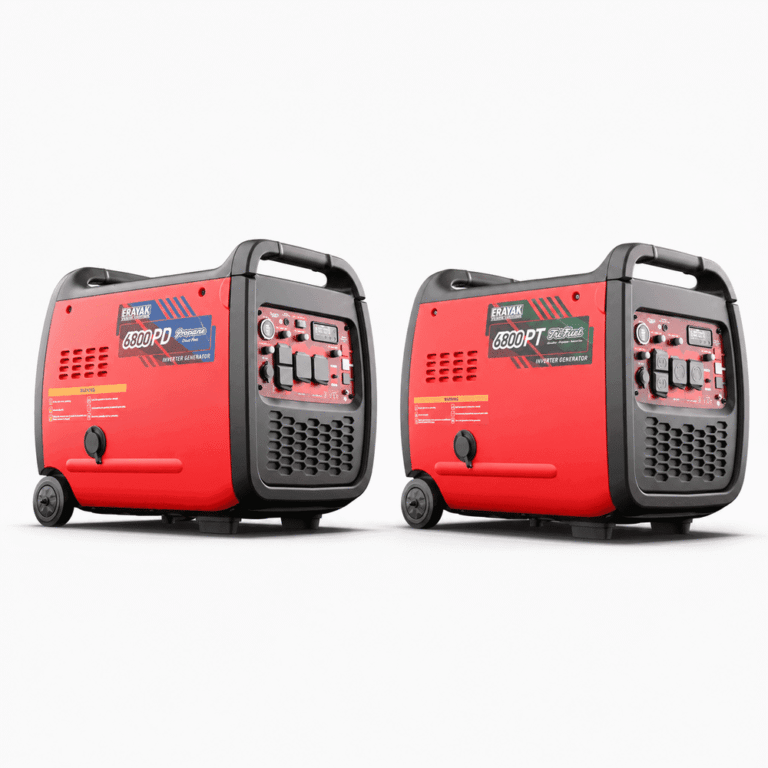
Both generators share 6,800W gasoline peak, 5,000W gasoline running, and 6,100W propane peak. The tri-fuel adds natural gas capability (5,400W peak) but does not state propane running watts. The dual-fuel includes propane running watts (4,500W). Your choice depends on whether you need natural gas or prefer a simpler dual-fuel setup.
Erayak Power offers two 6800W inverter generators with 120V/240V output and remote/electric starting: the 6800PT Tri-Fuel and the 6800PD Dual-Fuel. Both are designed for RV camping, home backup circuits, and outdoor power needs, based on the brand’s published specs.
The key difference lies in fuel options: the tri-fuel generator runs on gasoline, propane, or natural gas, while the dual-fuel model uses gasoline and propane only. Below, we compare the published specifications to help you decide which fits your situation.
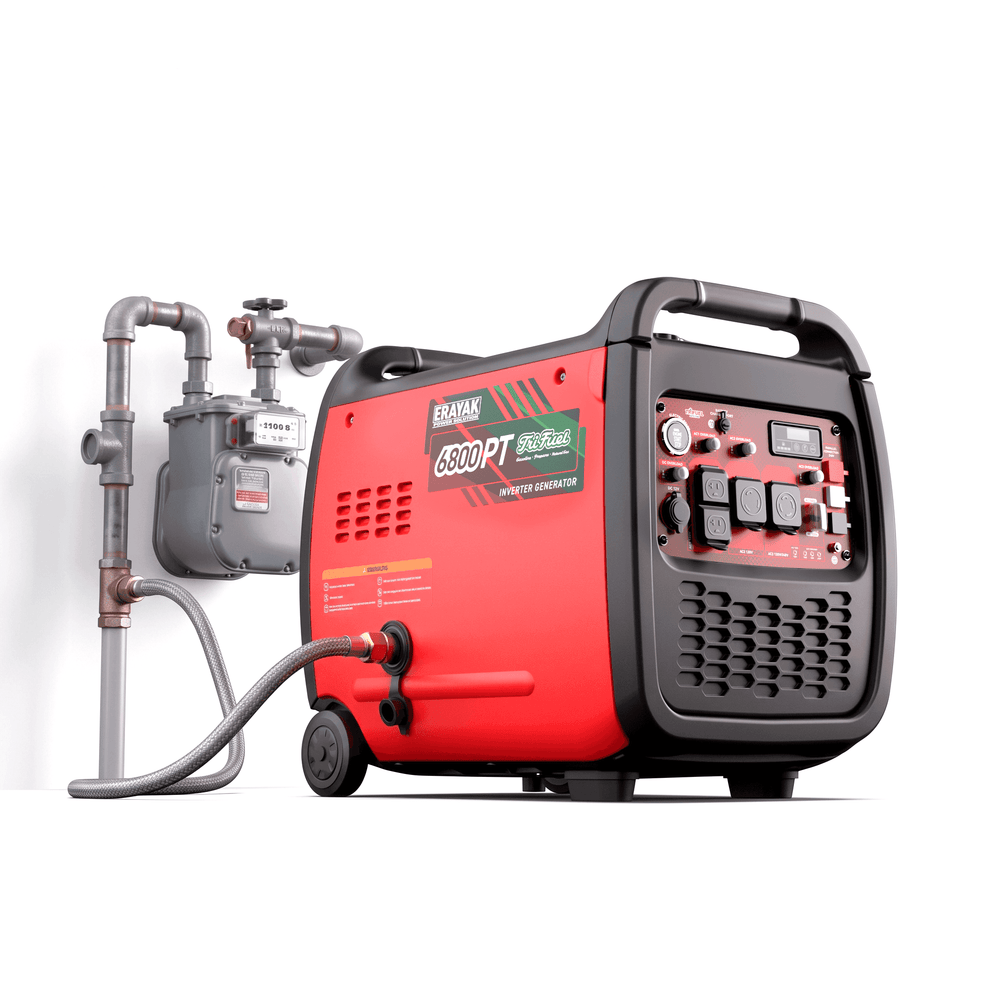
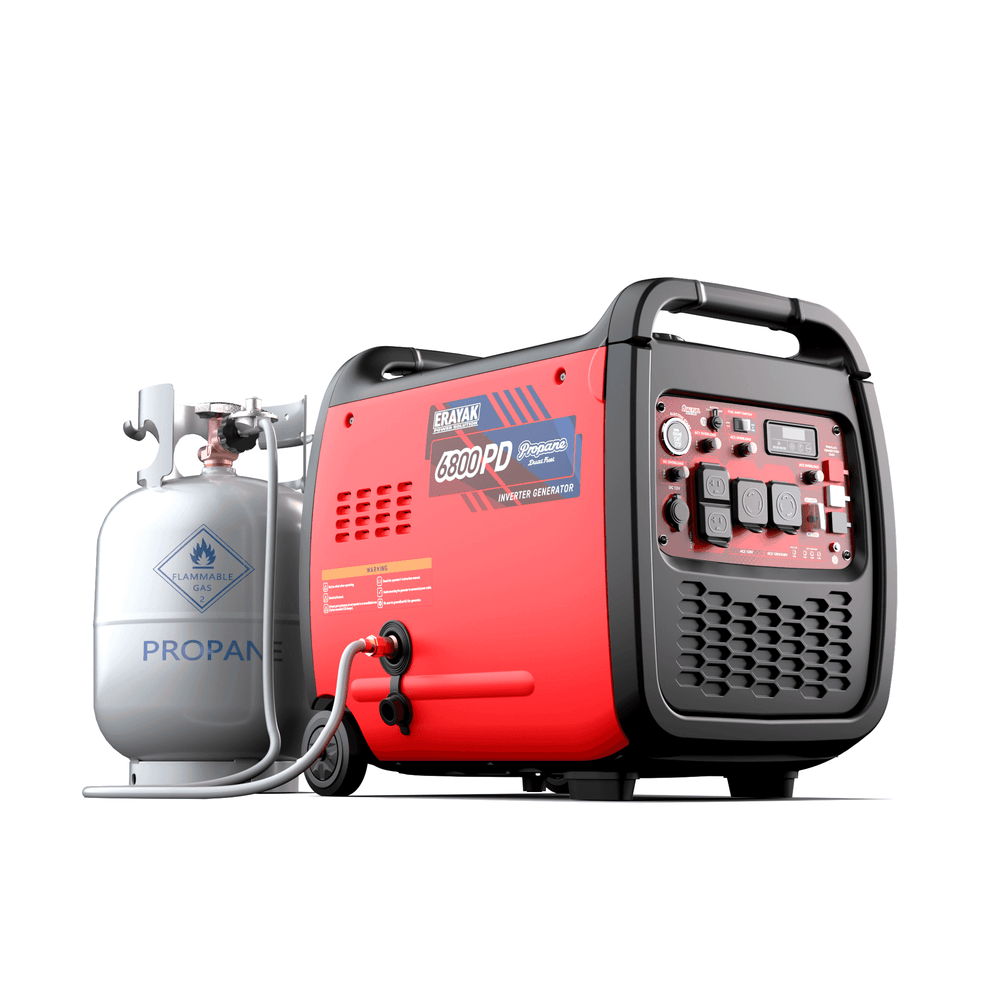
Side-by-side comparison
| 6800W Tri-Fuel 120V/240V Inverter Generator | 6800W Dual-Fuel 120V/240V Inverter Generator | |
|---|---|---|
| Type | Tri-Fuel (gasoline, propane, natural gas) | Dual-Fuel (gasoline, propane) |
| Gasoline Peak Watts | 6,800W | 6,800W |
| Gasoline Running Watts | 5,000W | 5,000W |
| Propane Peak Watts | 6,100W | 6,100W |
| Propane Running Watts | Not stated by the brand | 4,500W |
| Natural Gas Peak Watts | 5,400W | Not applicable |
| Natural Gas Running Watts | Not stated by the brand | Not applicable |
| Starting Method | Remote and electric start | Remote and electric start |
| Voltage | 120V/240V | 120V/240V |
| Return Policy | 30-day return, free return shipping | 30-day return, free return shipping |
| Warranty | Not stated by the brand | Not stated by the brand |
Choose 6800W Tri-Fuel 120V/240V Inverter Generator if
- If you need natural gas as a fuel option for extended backup or stationary use.
- For applications where natural gas availability is high and you want to avoid storing liquid fuel.
- When you value tri-fuel flexibility to switch among gasoline, propane, and natural gas.
Choose 6800W Dual-Fuel 120V/240V Inverter Generator if
- If you prefer a simpler dual-fuel setup with only gasoline and propane.
- When knowing the propane running wattage (4,500W) is important for load planning.
- For users who want the same gasoline peak/running specs as the tri-fuel without natural gas complexity.
6800W Tri-Fuel 120V/240V Inverter Generator: pros and cons
- Pro: Three fuel options: gasoline, propane, and natural gas.
- Pro: Natural gas peak wattage of 5,400W is stated.
- Pro: Remote and electric start for convenient operation.
- Con: Propane running watts not stated by the brand.
- Con: Natural gas running watts not stated by the brand.
6800W Dual-Fuel 120V/240V Inverter Generator: pros and cons
- Pro: Dual-fuel with both gasoline and propane; propane running watts (4,500W) are stated.
- Pro: Same gasoline peak (6,800W) and running (5,000W) as the tri-fuel model.
- Pro: Remote and electric start for easy use.
- Con: No natural gas capability.
- Con: Propane running watts (4,500W) are lower than gasoline running watts (5,000W).
Overview of Each Generator
Erayak 6800W Tri-Fuel (6800PT): According to the brand, this inverter generator runs on gasoline, propane, or natural gas. It delivers 6,800 peak watts and 5,000 running watts on gasoline, with a propane peak of 6,100W and a natural gas peak of 5,400W. Propane and natural gas running watts are not stated. It features 120V/240V output, remote and electric starting, and is built for RV camping, home backup, and outdoor work.
Erayak 6800W Dual-Fuel (6800PD): This model runs on gasoline and propane. It shares the same gasoline peak (6,800W) and running (5,000W) as the tri-fuel, plus a propane peak of 6,100W and a propane running rating of 4,500W. It also offers 120V/240V output, remote and electric starting, and is marketed for similar applications.
Where They Differ
The primary difference is fuel flexibility. The tri-fuel generator adds natural gas as a third fuel option, while the dual-fuel stops at propane. The tri-fuel does not state propane running watts or natural gas running watts; the dual-fuel does state propane running watts (4,500W). Both share the same gasoline peak/running and propane peak, as well as starting methods and voltage.
Which Fits Which Need (by Criteria)
Choose the tri-fuel if you have access to a natural gas line or want to keep that option open for extended outages. It is also a good choice if you want the broadest fuel flexibility from a single generator.
Choose the dual-fuel if you only need gasoline and propane and want propane running wattage explicitly stated for better load management. It may also be simpler if you don’t want to deal with a third fuel type.
What Neither Stated Model Provides
Neither the tri-fuel nor the dual-fuel product pages include information on: weight, dimensions, noise level, runtime at given loads, THD (total harmonic distortion), CO detection, outlet configuration, or warranty terms. The brand also does not state the propane running watts for the tri-fuel model. Check the brand’s site for updates or additional specs.
See 6800W Tri-Fuel 120V/240V Inverter Generator See 6800W Dual-Fuel 120V/240V Inverter Generator
Frequently asked questions
What fuels can the tri-fuel generator use?
Based on the brand’s published info, the 6800PT Tri-Fuel generator runs on gasoline, propane, and natural gas. Natural gas peak is stated at 5,400W, but natural gas running watts are not stated.
What fuels can the dual-fuel generator use?
The 6800PD Dual-Fuel generator runs on gasoline and propane. Propane peak is 6,100W and propane running is 4,500W, as stated by the brand.
Do both generators have the same starting method?
Yes. Both the tri-fuel and dual-fuel models feature remote and electric starting, according to their product descriptions.
Is a warranty offered for these generators?
No warranty information is stated by Erayak Power for either the 6800PT or 6800PD. Check the brand’s website for possible updates.
What is the return policy for these generators?
Erayak Power’s general return policy applies: returns accepted within 30 days of delivery, items must be unused with original packaging, and return shipping is free. The policy is the same for both products.