Choosing an inverter generator depends on your power needs, fuel preferences, and portability requirements. Based on Erayak Power’s published specs, you should consider rated vs. peak wattage, fuel type (gasoline, dual-fuel, or tri-fuel), starting method, and additional features like parallel capability or remote start. No single model fits all, so match the specs to your intended use.
If you are searching for ‘how to choose inverter generator’, this guide uses Erayak Power’s product lineup to illustrate key considerations. Inverter generators provide clean, stable power suitable for sensitive electronics, and they often operate more quietly than conventional generators.
Erayak Power offers models ranging from 2,400W portable units to 13,000W heavy-duty systems, with fuel options including gasoline, propane, and natural gas. By focusing on your actual power requirements and usage environment, you can narrow down the right generator from the brand’s inverter generator category.
Who This Guide Is For
This guide is for shoppers who need to select an inverter generator for home backup, RV camping, jobsite power, or outdoor events. It is especially relevant if you are evaluating Erayak Power’s inverter generators and want to understand the key differences between models using only the brand’s published information.
Key Criteria Based on Brand Data
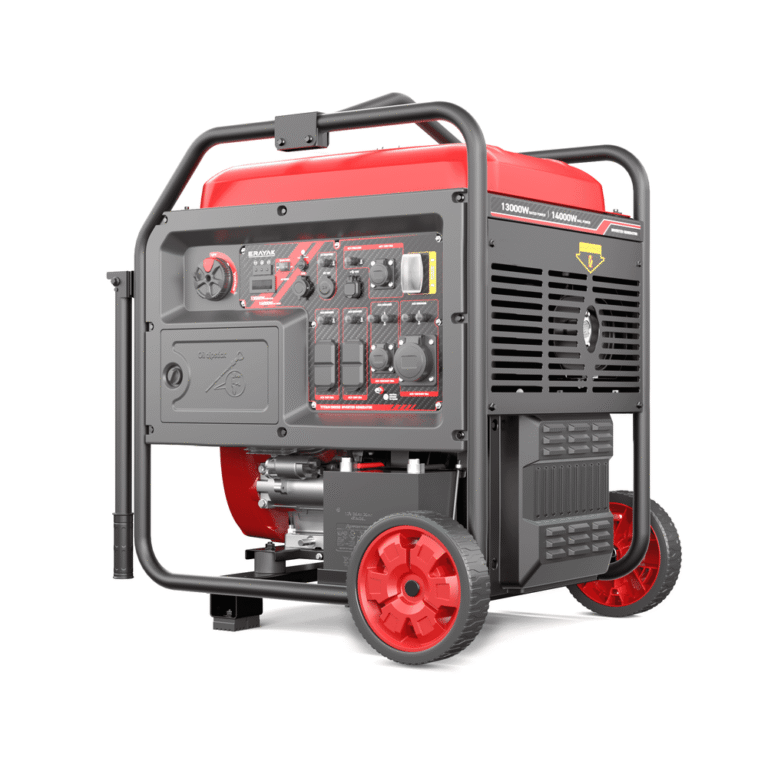
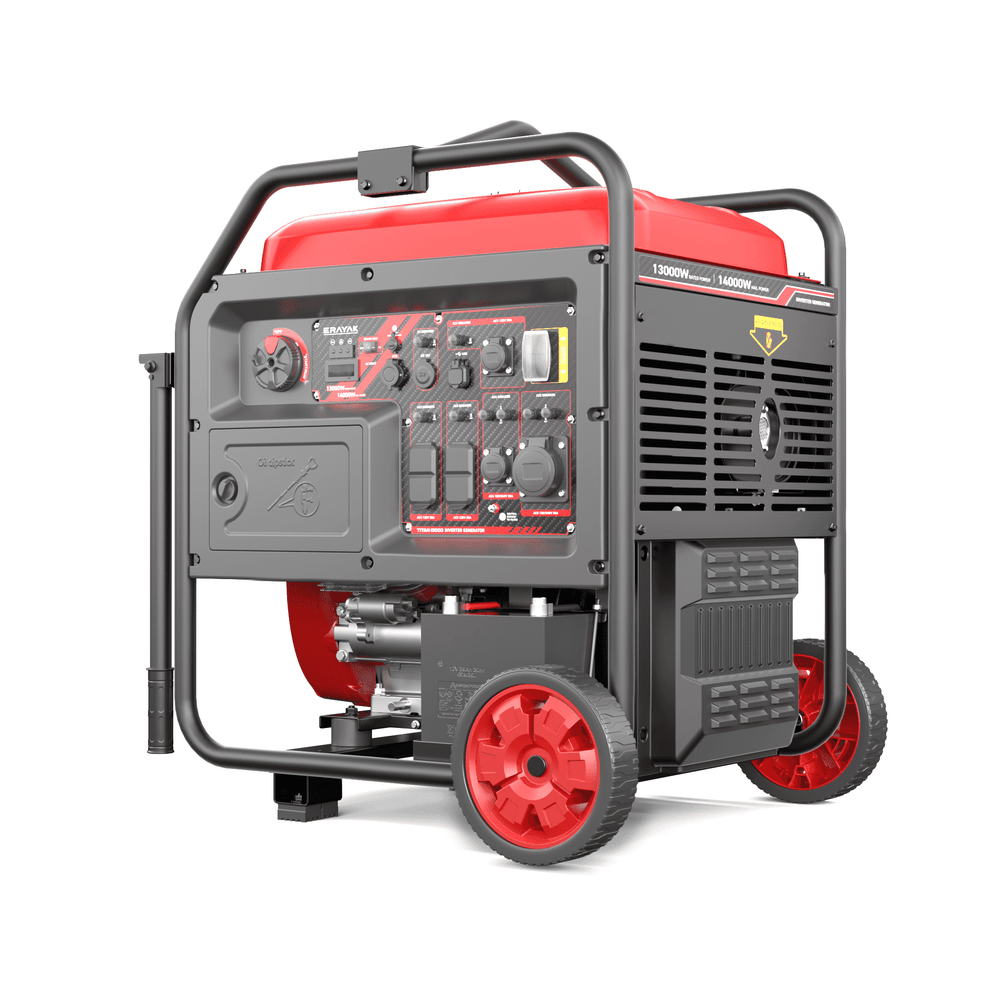
- Wattage: Check both peak (surge) and rated (running) watts. For example, the ERAYAK Titan13000 offers 14,000W max / 13,000W rated, while the 2400W model offers 2,400W peak / 1,800W rated (calculated from 55% load runtime). Match to the devices you plan to power.
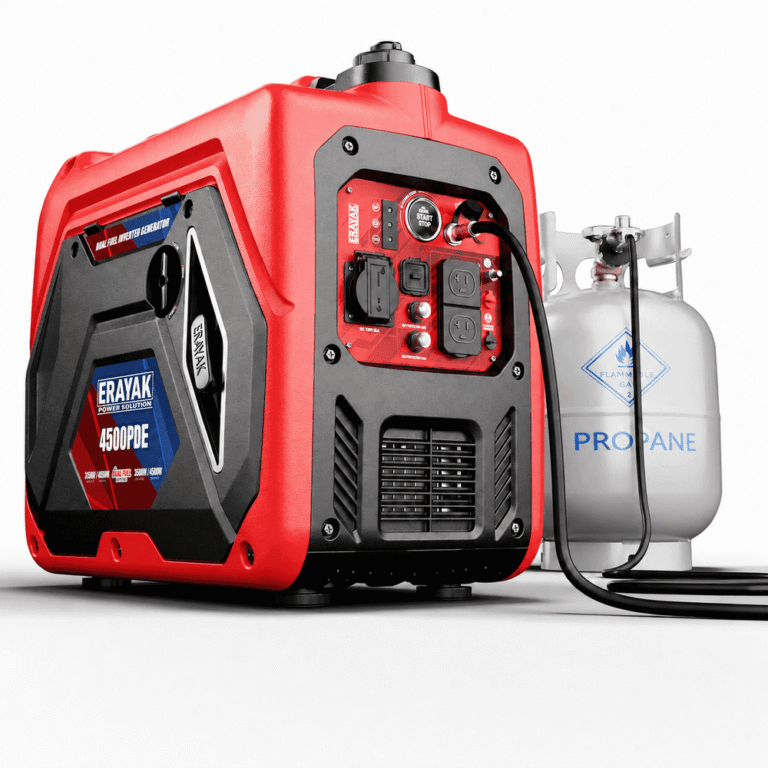
- Fuel Type: Gasoline-only, dual-fuel (gasoline + propane), or tri-fuel (adds natural gas). The ERAYAK 6800PT is a tri-fuel model; the 4500PD series is dual-fuel. Propane and natural gas offer longer shelf life and cleaner operation.
- Starting Method: Manual recoil, electric start, or remote start. The 4500PDE has electric start with recoil backup; the 4500PDM is manual only. Remote start is available on Titan models.
- Voltage & Outlets: 120V-only or 120/240V. Models like the Titan9500 and 6800PD offer 120/240V for heavy-duty appliances. Check outlet types: TT-30R for RV, L14-30R for 240V, etc.
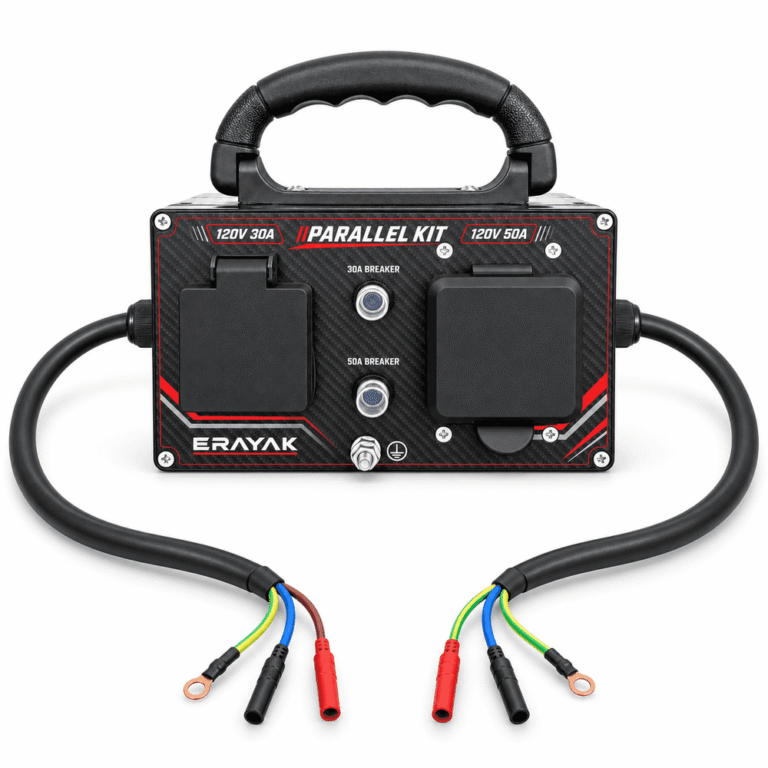
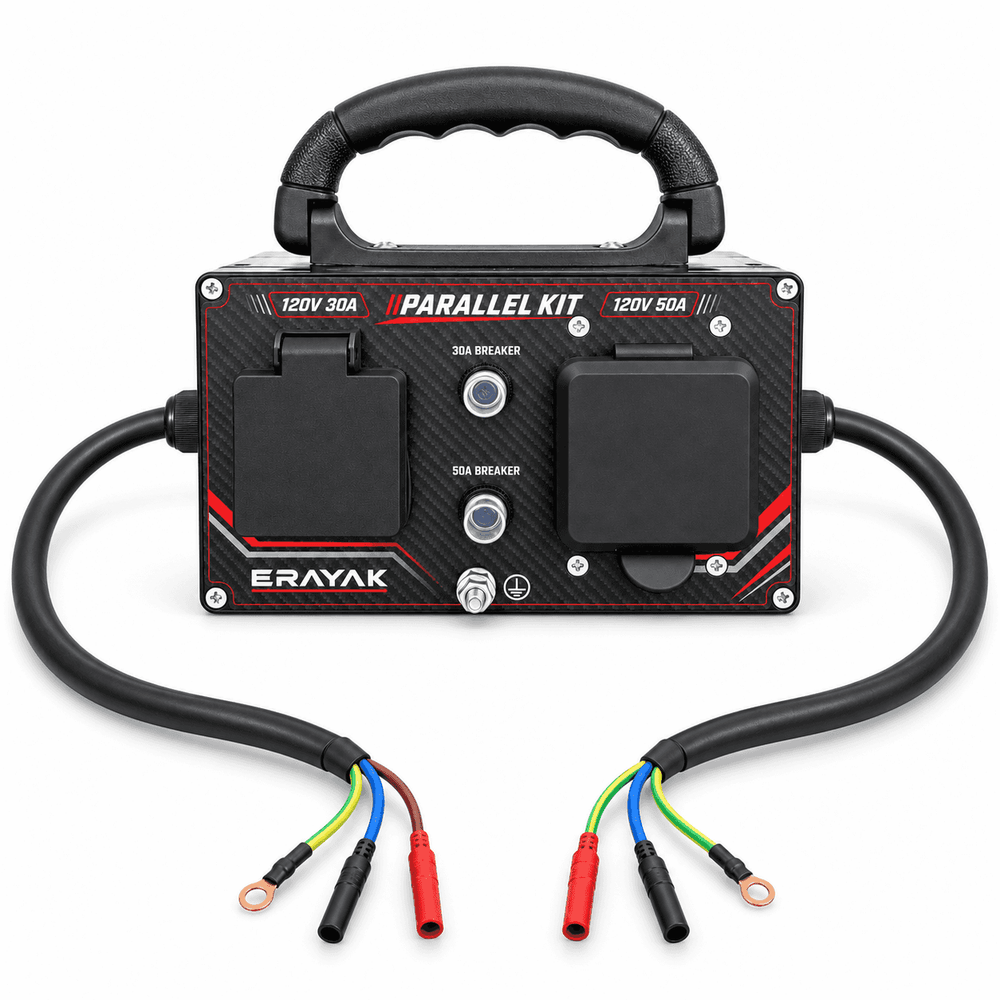
- Parallel Capability: Some ERAYAK models can be paired with a parallel kit (sold separately) to double output. The ERAYAK Generator Parallel Kit connects two compatible units with 30A or 50A outlets.
- Portability: Weight and wheel kit availability. The 2400P weighs 42 lbs; the 4500P series weighs around 55 lb. A dedicated wheel kit is available for EYG series.
- Noise Level: Brand states ~55-62 dB at 25% load for some models, such as the 2400P and 4500PD.
Common Mistakes to Avoid
- Ignoring fuel type flexibility: If you might need propane for storage or natural gas for extended outages, a dual-fuel or tri-fuel model (like 6800PT) could be more suitable even if initially more expensive.
- Overlooking starting method: Manual pull-start can be difficult for some users. Consider electric or remote start if ease of use matters.
- Assuming all inverters are 120/240V: Some portable models like the 2400P are 120V only. Verify voltage requirements for your appliances.
- Not accounting for altitude: ERAYAK offers a High Altitude Jet Replacement Kit for use above 3000 ft with gasoline engines. Standard carburetion may run rich at elevation.
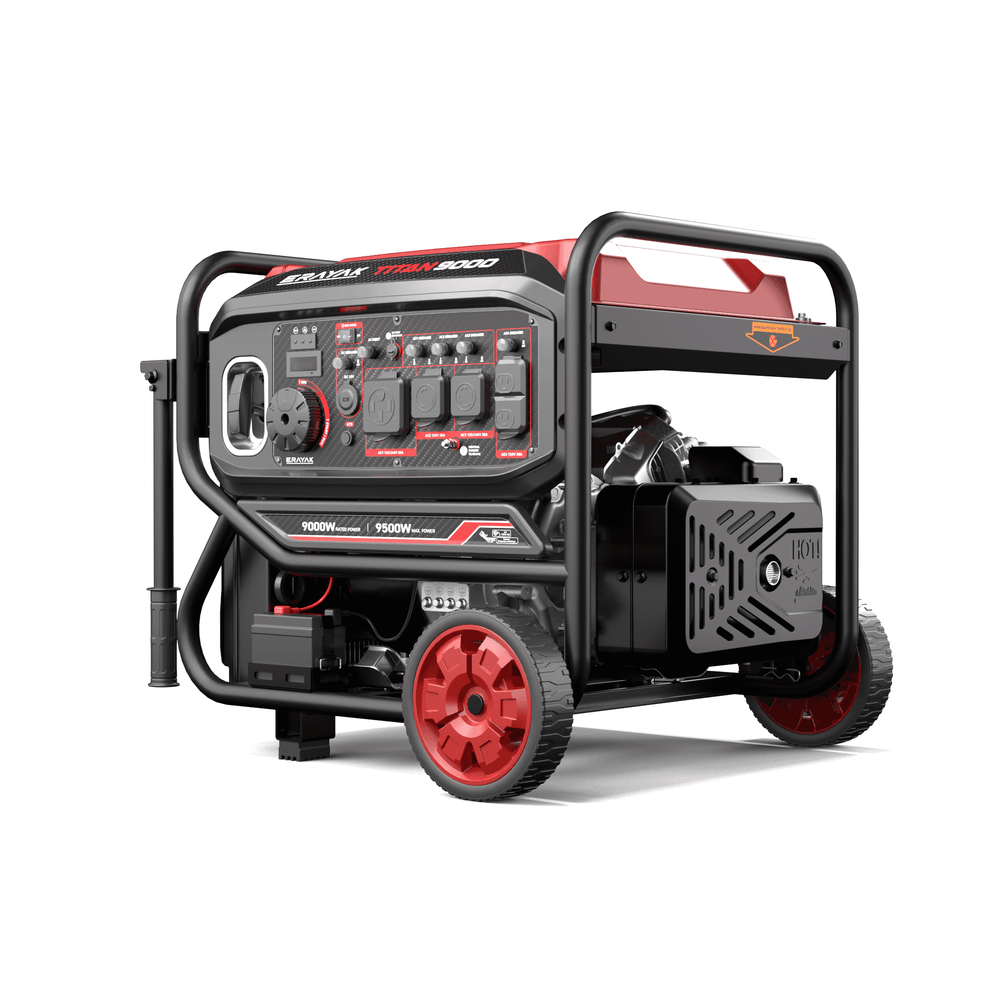
- Forgetting parallel capability when future expansion is needed: If you expect to need more power later, choose a model that supports parallel operation (e.g., Titan9000 or 4500PD).
Questions to Ask the Brand
- What is the warranty period? (The brand does not state this; you should ask.)
- What is the fuel consumption at 50% load for each model? (Not provided in the excerpted data; inquire.)
- Are CO detection or automatic shutoff features included? (Not mentioned; confirm.)
- What is the noise level at rated load? (Brand only provides dB at 25% load for some models.)
- Does the generator support ATS (automatic transfer switch) connectivity? (Brand states Titan models have ATS compatibility; check for others.)
Examples from the Brands in the Data
Based on Erayak Power’s product listings, here are four models that illustrate different use cases:
- 2400w-inverter-generator-camping-rv – Compact 2,400W gasoline model for camping and small essentials; 42 lbs, 55 dB quiet operation, up to 10 hours runtime at 25% load.
- 4500w-dual-fuel-inverter-generator-rv-camping – 4,500W dual-fuel (gasoline/propane) with choice of manual or electric start; 62 dB, RV-ready with TT-30R outlet.
- erayak-6800w-portable-inverter-generator-120v-240v-for-rv-home-backup-dual-fuel – 6,800W peak dual-fuel with 120/240V output, electric and remote start, parallel capable.
- 13000w-inverter-generator-titan13000 – 14,000W surge heavy-duty inverter with 13.2 gal fuel capacity, remote start, ATS compatible, for home backup and large loads.
Checklist Before You Order
- Confirm the peak and rated wattage matches your largest loads and starting surge requirements.
- Choose fuel type: gasoline only, dual-fuel, or tri-fuel based on availability and storage preferences.
- Verify the voltage (120V or 120/240V) and outlet types match your transfer switch or extension cords.
- Check starting method: manual, electric, or remote. Ensure it suits your physical ability.
- Assess portability: weight and whether a wheel kit is available for your model.
- Review the return policy: ERAYAK accepts returns within 30 days, items must be unused and in original packaging. Return shipping is free.
- Note shipping details: orders processed same business day if placed before noon (except holidays). Delivery times are estimates. For Canadian orders, GST/HST and duties may apply.
- If using at high altitude (above 3000 ft), consider the High Altitude Jet Replacement Kit.
- Check if you need a parallel kit or additional accessories like a spark plug or fuel tank replacement kit.
Frequently asked questions
What is an inverter generator and how is it different from a conventional generator?
Inverter generators produce cleaner power with lower total harmonic distortion (THD), making them safe for sensitive electronics like laptops and CPAP machines. They also tend to be quieter and more fuel-efficient because engine speed adjusts to load. Erayak Power’s inverter generators feature ECO mode for fuel saving and quiet operation.
How do I determine the right wattage for my needs?
Add up the running watts of all devices you plan to power simultaneously, then add the highest starting surge wattage. Based on Erayak’s lineup, a 2,400W model like the 2400P can run small essentials, while a 4,500W unit like the 4500PD can handle RV AC and refrigerator. For whole-home backup, consider the Titan13000 with 13,000 rated watts.
What fuel types does Erayak offer for inverter generators?
Erayak offers gasoline-only, dual-fuel (gasoline and propane), and tri-fuel (gasoline, propane, and natural gas) models. For example, the 6800PT is tri-fuel, while the 4500PD series is dual-fuel. Propane and natural gas are cleaner-burning and store longer, but natural gas requires a hookup.
Can I connect two Erayak generators together for more power?
Yes, if your generator model supports parallel operation. Erayak sells a Generator Parallel Kit (30A/50A outlets) and a 50 Amp Parallel Cord Kit (cUL listed) that allow you to combine two compatible units. Models like the Titan9000 and many 4500W+ units are parallel capable according to the brand.
What is the warranty on Erayak inverter generators?
The brand’s published data does not include warranty terms. You should contact Erayak Power directly to confirm the warranty coverage and duration before purchasing.